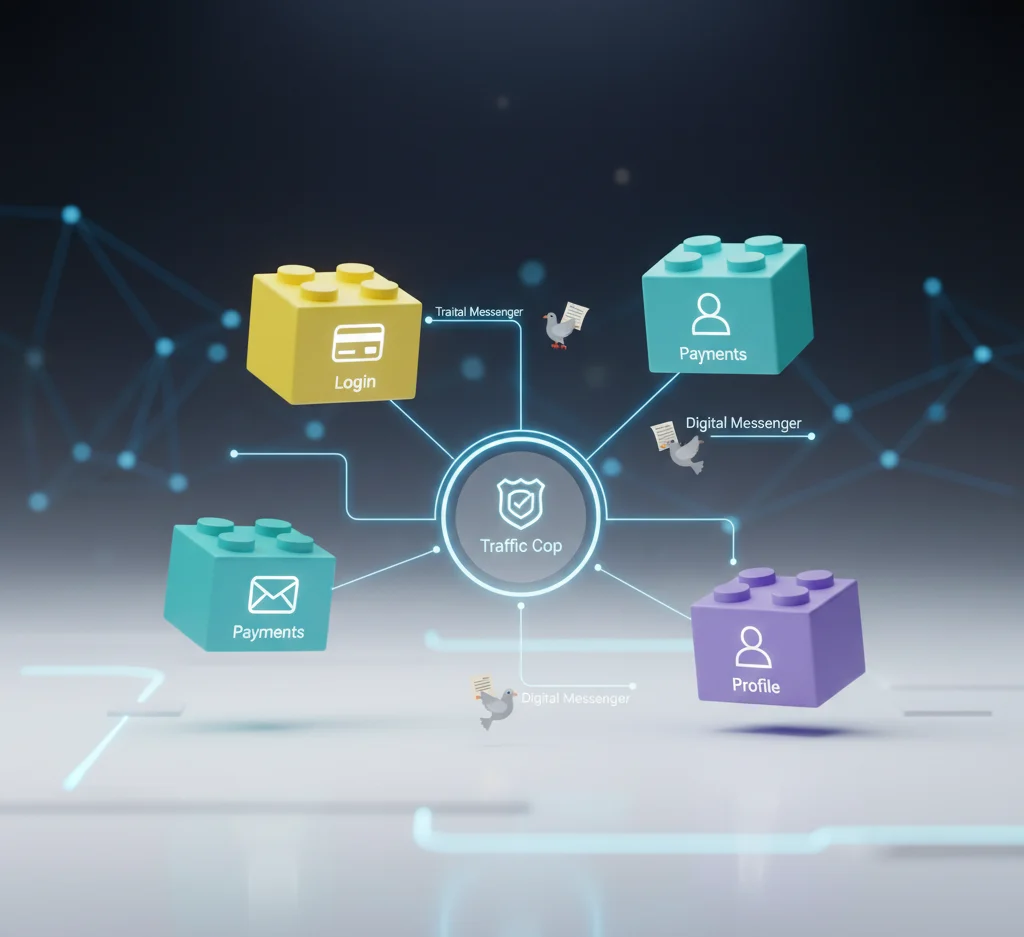
Have you ever wondered how apps like Instagram or Uber handle millions of people at the same time without crashing?
It’s not just one giant computer running the show. It’s actually a "Team" of tiny apps working together. This is what we call Modern System Design.
1. The Old Way: The "Giant Jenga Tower"
In the past, apps were built like one big tower. If you wanted to change one small piece at the bottom, the whole thing might wobble or fall.
- The Problem: It’s slow to change and risky to fix.
2. The New Way: The "Lego Set"
Today, we build apps like Legos. Instead of one big block, we have hundreds of small pieces:
- One Lego handles your Login.
- One Lego handles your Payments.
- One Lego handles your Profile.
Why is this better? If the "Payment" Lego breaks, you can still browse your profile while the engineers swap out that one piece. The rest of the app stays alive!
3. How do they talk to each other?
Imagine these Legos are in different rooms. They use a "Digital Messenger" to send notes back and forth.
- Messenger: "Hey, User #505 just paid for a coffee. Please update their rewards balance!"
- Response: "Got it! Updating now."
4. The "Traffic Cop"
To keep everything organized, there is a Traffic Cop at the front door. When you click a button, the Cop looks at your request and points you to the right Lego. This keeps the crowds moving smoothly so the app never feels slow.
Conclusion:
Modern apps aren't "one thing" they are a symphony of small parts. By breaking things down, companies can move faster, stay online 24/7, and grow as big as they want.