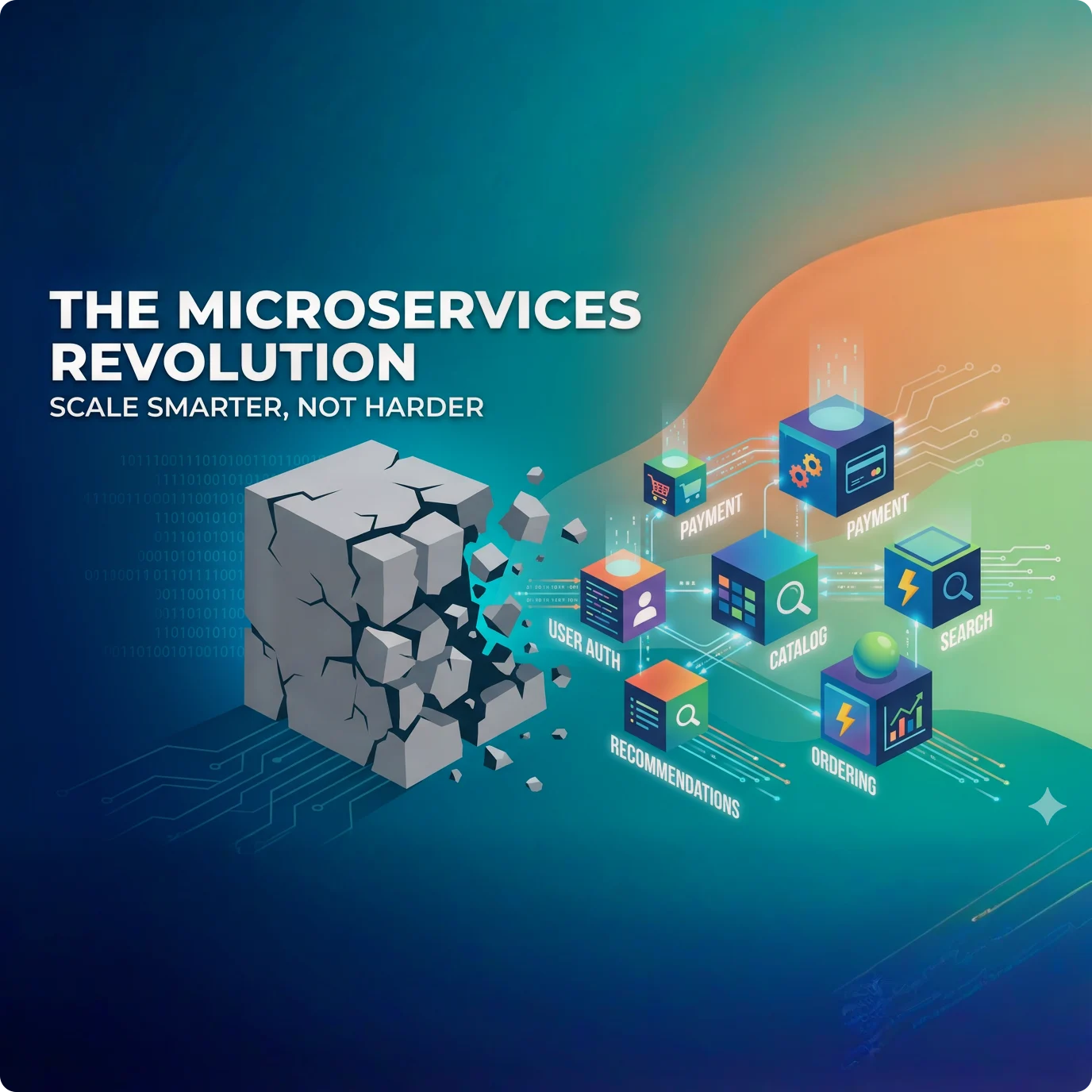
What are Microservices?
Microservices architecture is an approach to building applications as a suite of small, independent services. Each service focuses on a single business function—like payment or user auth and communicates via lightweight APIs.
Why Choose This Path?
- Independent Scaling: Scale only the specific services facing high demand (e.g., your checkout service during a sale) instead of the whole app.
- Faster Deployment: Teams can update or fix one service without redeploying the entire codebase, speeding up time-to-market.
- Fault Isolation: If the "recommendation engine" fails, your "shopping cart" stays online, preventing a total system crash.
- Tech Freedom: Use the best tool for the job—Python for AI, Node.js for real-time chat—within the same application.
The Real Challenges
- Operational Complexity: Managing dozens of services requires robust Kubernetes orchestration and automated CI/CD pipelines.
- Data Consistency: Since each service has its own database, keeping data in sync across the system becomes a major hurdle.
- Debugging Hurdles: Finding a bug across a distributed network of services is significantly harder than in a single monolith.
Conclusion
Microservices are ideal for large-scale, rapidly growing systems. For small projects, a "Majestic Monolith" is often faster and cheaper to maintain..